Irada · ارادہ · means intention
Turn intention into action.
A brain-signal headset, a phone app and a careful AI agent that let people living with paralysis call family, send a message or ask for help, using commands they have practised.
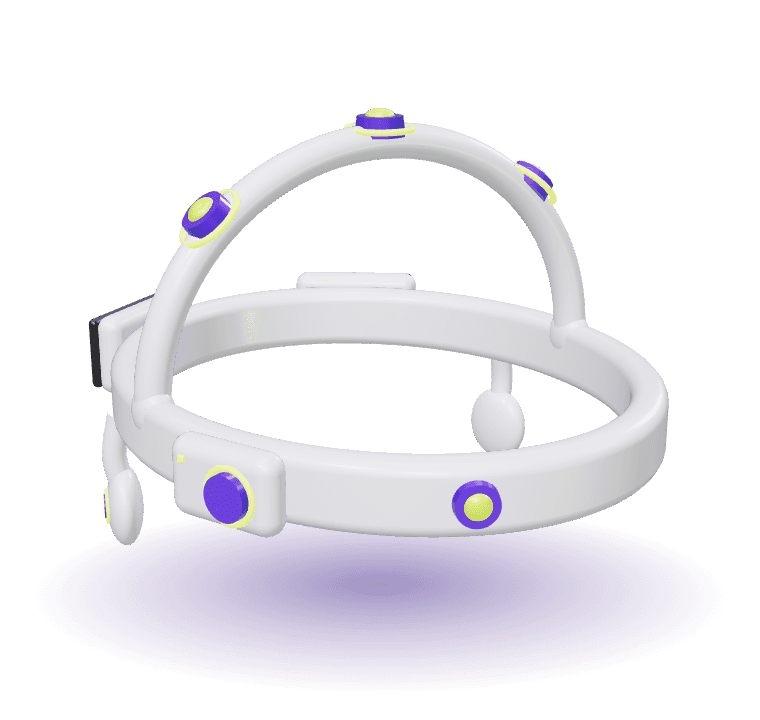
- 5 scalp electrodes on the 10-20 system
- ~250 samples per second
- Bluetooth Low Energy
- Battery power only
- 4–6 practised commands
- Works offline
01 · The problem
The mind is fine. The phone is out of reach.
Some people cannot move their hands or speak because of spinal-cord injury, ALS, stroke or cerebral palsy. They are fully aware, but they cannot use a phone to call family, send a message or ask for help.
- Spinal-cord injury
- ALS
- Stroke
- Cerebral palsy
How many people
[number]
people in Pakistan living with severe motor or speech impairment. Add a verified source before the pitch.
End users
Adults and young adults
with severe motor or speech impairment who are cognitively aware.
Buyers first
Rehab centres and hospitals
Spinal-injury units first. Later, families, charities and NGOs.
Helpers
Caregivers and therapists
set up the headset, run calibration and review the activity log.
02 · The solution
One headset. One app. One careful agent.
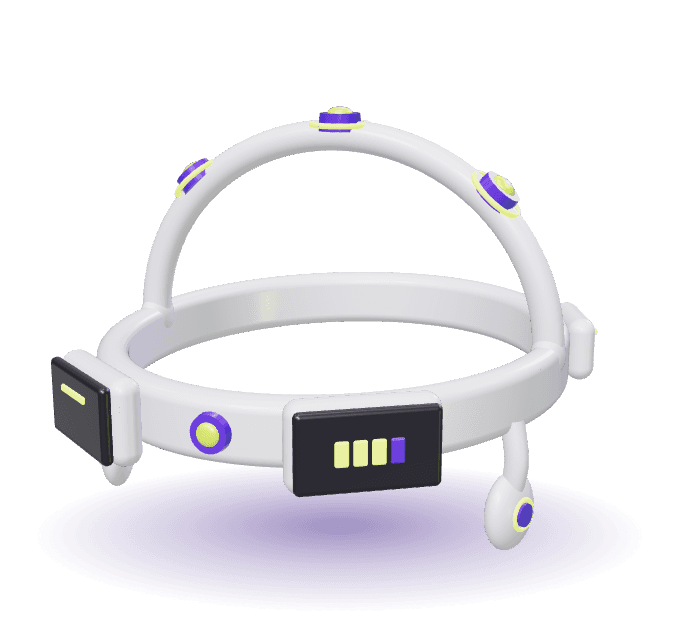
The headset
Electrodes on the scalp pick up tiny EEG signals. A small circuit amplifies, digitises and sends them to the phone.
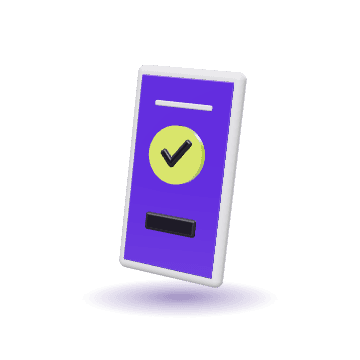
The phone app
Checks the signal, runs calibration, shows large simple menus and always asks for confirmation. It keeps a log of everything.
The AI agent
A fixed allowlist of tools: call a saved contact, send a preset message, send an emergency alert, open the calendar, cancel. Nothing else.
IRADA does not read thoughts. It recognises a small set of commands the user has practised, the same way a keyboard recognises key presses.
03 · How it works
From intention to action in five steps.
Every step is visible to the user. The fourth one is the one that matters most: nothing happens until the user says yes.
01
Record
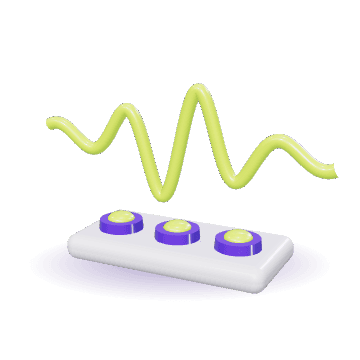
Scalp electrodes pick up EEG. A small circuit amplifies, digitises and sends it over Bluetooth Low Energy.
02
Clean
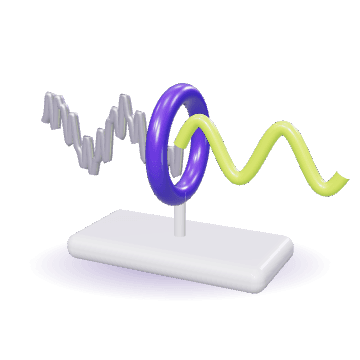
The app checks contact, removes mains hum, blinks and muscle noise, and cuts the signal into short windows.
03
Decode
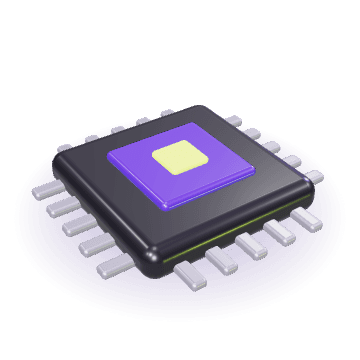
A model trained for that user predicts which command was intended, and how confident it is.
04
Confirm
The app shows the command. The user confirms or cancels with a second, simple selection. Nothing runs without this.
05
Act
The agent carries out the confirmed action: call a saved contact, send a preset message, or share location in an emergency.
Under the hood: every interaction is a state machine, and every transition is logged
- Idle
- Listening
- Intent detected
- Awaiting confirmation
- Executing
- Done
- Cancelled
- Error
04 · The headset
Six parts. Nothing invasive.
Electrode positions follow the international 10-20 system. Turn the live 3D model to look around it.
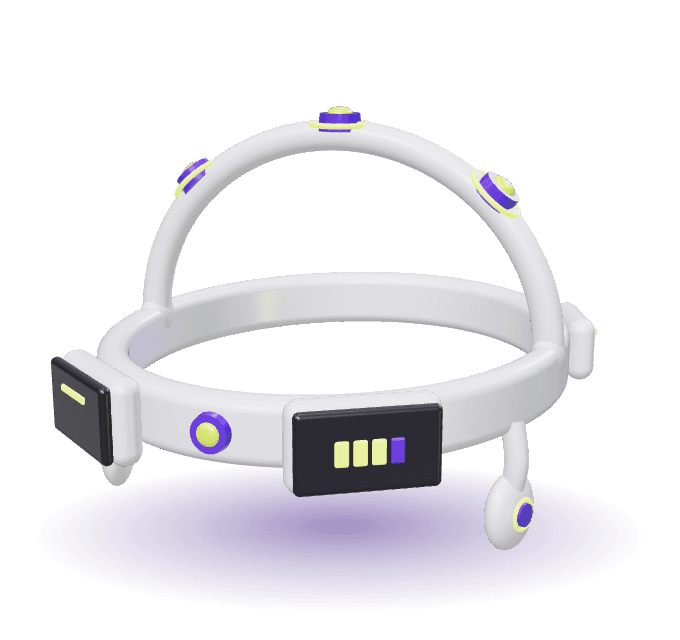
- Electrodes
- C3 · Cz · C4 · Fp1 · Oz
- Ground + reference
- Mastoids
- Sampling
- ~250 per second
- Link
- Bluetooth LE
- Battery
- 3.7 V LiPo, 1,000–2,000 mAh
- Weight
- [grams]
05 · Ways to choose
Not everyone's brain works the same way. So there are four ways in.
We start with motor imagery, add a flashing P300 menu for selection and confirmation, and keep a switch fallback from day one.
- Start here
Motor imagery
The user imagines moving the left hand, right hand, feet or tongue. Activity over C3, Cz and C4 changes in a measurable way.
Good for: no screen needed
Watch: some people cannot do it reliably
- Menus
P300 selection
Options flash on screen. When the flash matches what the user wants, the brain responds about 300 ms later.
Good for: people who cannot do motor imagery
Watch: slower
- Opt-in
SSVEP
Targets flicker at different rates. Looking at one produces a matching rhythm in the visual cortex.
Good for: speed and accuracy
Watch: flicker can tire the eyes, so we warn first
- Always on
Fallbacks
Eye tracking, a single switch, or caregiver-assisted selection for anyone who cannot use a brain-based method.
No one is left without a way to choose
06 · The app
Big buttons. Few choices. Always a way out.
The patient only selects and confirms. Here is one message, from menu to confirmation, in the simulated demo.
What would you like to do?
Selecting with motor imagerySend message:
I need help
If confidence is low, IRADA asks again instead of guessing.
Send “I need help” to Ahmed?
Cancels by itself in 8 seconds. Silence is never consent.
Patient view
Large buttons, few choices on screen, high contrast and optional voice prompts. Urdu and English.
Caregiver view
Set-up, calibration help, contacts, preset messages, alerts, the activity log and battery status, on their own phone.
Therapist view · later
Progress over time, accuracy per command, session length, notes and reports for the rehabilitation team.
07 · Safety
You confirm every action.
There is no free-running autonomy. The decoded command picks a tool, the user confirms, and only then does the tool run.
No action without confirmation.
Emergency and unknown-number actions need a stronger confirmation, like two selections in a row or a caregiver tap.
Low confidence means ask again.
IRADA never guesses.
Weak signal pauses the system.
The user and caregiver are told why.
Timeout cancels.
Silence is never treated as consent.
A button or a caregiver can always cancel.
From the caregiver's phone or the physical button on the headset.
Every action is logged and reviewable.
What was done, when, to whom, and how confident the model was.
What it can do
With calibration and practice: recognise a handful of distinct commands, show its confidence, ask for confirmation, trigger simple phone actions and log everything.
What it cannot do
Read free thoughts, turn imagined speech into text, work equally well for everyone, work without calibration, or replace caregivers.
08 · Privacy
Brain signals are health data. We treat them that way.
Consent at first use, with a plain-language explanation of what is stored. And we never sell it.
Raw EEG stays on the phone
Only summaries are shared, and only if the user agrees.
Works offline
Everything runs with no internet and no account. The cloud is optional, and later.
Encrypted
At rest and in transit, with optional encrypted sync.
Role-based access
Patient, caregiver and clinician each see only what they need.
Delete my data
One button to delete, and an export for the user.
Research only by opt-in
A separate, anonymised research mode the user chooses to join.
09 · Use cases
One pipeline. Several futures.
Signal, decode, confirm, act. We build the first one properly and treat the rest as options.
- Building now
Phone control and emergency alerts
For people with severe paralysis. This is the focus.
- Next
Communication board
Symbols and phrases in Urdu and English, spoken aloud, for people who cannot speak.
- Version 4
Smart-home control
Lights, fan, TV and door intercom through simple smart switches.
- With therapists
Rehabilitation practice
Motor-imagery practice games, built with therapists as a supported practice tool, never a treatment claim.
- Business option
Hospitals and care homes
Shared devices, caregiver dashboards, shift handovers and reports.
- Business option
Research and education kit
A low-cost EEG teaching kit for universities and a local dataset platform.
10 · Market
Who pays first, and how we earn before the clinic.
First buyers
Rehabilitation centres, spinal-injury units and hospitals
They already have the patients, the therapists and the caregivers who set the headset up.
Later
Families, charities and NGOs
Once the pilot is done and a first batch is priced and assembled.
Early revenue
EEG teaching kit for universities
A first revenue line that does not need clinical approval.
< USD 500
Target headset cost with our own custom board (Tier 4)
[size]
Market size, from a verified source
[count]
Rehabilitation centres we can reach first
[price]
Price per centre or per seat
11 · The build path
Software first. Then cheap hardware. Then the real thing.
Four hardware tiers, each proving one more link in the chain before we spend on the next. Prices are rough PKR estimates.
Tier 0
Software only
PKR 0–5,000
Laptop, free notebooks, public datasets. Proves decoding and the app.
Tier 1
Home-built signal chain
PKR 15,000–30,000
ESP32, ADC, biopotential board. Real blinks, clenches and alpha reach the phone.
Tier 2
Hobby-grade EEG
PKR 70,000–130,000
OpenBCI Ganglion, 4 channels. Enough for P300 and SSVEP.
Tier 3 · V1 target
Research-grade
PKR 300,000–800,000
OpenBCI Cyton or an ADS1299 board. The realistic route to motor imagery.
Tier 4 · later
Our own board
Under USD 500
Custom ADS1299 PCB with microcontroller and Bluetooth, after safety review.
12 · Roadmap
Eighteen months to a supervised pilot.
If time and money are tight, Phases 0 and 1 come first. They cost almost nothing and prove the core.
Phase 0 · wk 1–2
Set up
Tools, datasets, EEG basics, roles, an advisor.
Phase 1 · wk 2–6
Software proof
Classifier on public data, app with simulated signals and the emergency flow.
Phase 2 · wk 3–8
Signal chain
Tier 1 hardware streaming blinks, clenches and alpha to the app.
Phase 3 · wk 8–14
Integrate
Live calibration, P300 menu, switch fallback, warnings and logging.
Phase 4 · wk 14–20
Volunteer testing
Healthy adults, written protocol, accuracy per user and per command.
Phase 5 · mo 5–9
Pilot prep
Ethics application, rehab partner, consent, Urdu caregiver guide.
Phase 6 · mo 9–18
Supervised pilot
A small group, a results write-up, pricing and a first-batch plan.
Version 1 · now
Prototype
Simulated and replay modes, command menu, confidence, timed confirmation, log, signal warnings.
Version 2
Usable prototype
Live Bluetooth headset, personal model, P300 and switch, caregiver alerts, Urdu and English.
Version 3
Pilot product
Clinician dashboard, encrypted sync, safe model updates, Urdu onboarding videos.
Version 4
Later ideas
Smart-home, reminders, a symbol board, eye tracking, multi-user for centres.
13 · How we'll know
Numbers we hold ourselves to.
Accuracy is measured per user and per command, with a confusion matrix, never as one headline number.
0
actions executed without confirmation in testing
<10 min
calibration for a new user
70–85%
typical two-class motor-imagery accuracy on good data. A range to measure, not a promise.
4–6
commands in the first vocabulary, kept small on purpose
14 · Team Hexabytes
The people building IRADA.
Two builders today, with the advisor, engineer and clinical partner we are recruiting early.
Muneeb Mustafa
App and agent development
[role · photo]
Huzaifa Shahid
App and agent development
[role · photo]
Recruiting
Signal processing and ML
MNE, scikit-learn, PyTorch
Recruiting
Faculty advisor
[name, university]
Recruiting
Electronics mentor
Analog front end, firmware, PCB, safety
Partnering
Clinical partner
A physiotherapist or rehabilitation centre
15 · The ask
PKR 25M to reach a supervised pilot with about 30 patients in eighteen months.
- Stipends
- Hardware
- Compute
- Ethics
- Pilots
- Legal
- Contingency
Minimum proof · Tier 0 + 1
PKR 20,000–35,000
Serious V1 prototype · Tier 3 board, cap, tools, testing
PKR 400,000–900,000
Full programme to pilot · 18 months
PKR 25,000,000
At this competition
[competition name] · [amount we are asking for]
Spend order: software and data first, a cheap signal chain second, a research-grade board only once the software works, and a custom board last. All prices are rough estimates.
16 · Questions
The questions judges ask us.
Does IRADA read thoughts?
No. It recognises a small set of commands the user has practised, like a keyboard recognising key presses. It cannot read free thoughts or turn imagined speech into text.
Is it a medical device?
No. It is an assistive prototype until ethics approval, testing and regulatory steps, including DRAP medical-device advice, are done.
What if it picks the wrong command?
Nothing happens until the user confirms. Low confidence makes the app ask again, the confirmation times out to cancel, and a button or caregiver can stop anything.
What if someone can't do motor imagery?
They can use a P300 flashing menu, eye tracking, a single switch or caregiver-assisted selection.
Where does the brain data go?
Raw EEG stays on the phone. It is encrypted, never sold, and the user can export or delete it.
Has it been tested on patients?
Not yet, on purpose. We test only on consenting adults on the team until ethics approval and clinical oversight are in place. The supervised pilot is Phase 6.
Back the pilot
Help us turn intention into action.
- [team email]
- Phone
- [number]
- Based in
- [city], Pakistan
Built in Pakistan